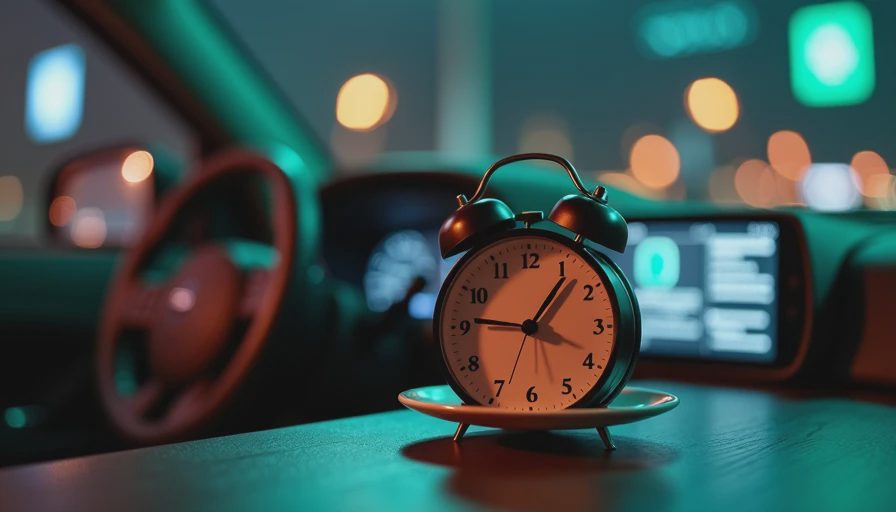
It was around mile 240 on a return trip from Louisville that I first really understood **fatigue and driving** as a serious pair. The highway was straight, the radio was low, and my eyes felt like they were fighting a losing battle against the gray afternoon light. I wasn't drunk, wasn't sick, just tired. And that's exactly when **fatigue and driving** becomes dangerous—when it sneaks up so gradually you don't realize your reaction time has doubled.
I've spent years behind the wheel for work and family trips across Ohio, Indiana, and Kentucky. Over those miles, I've learned that **fatigue and driving** is a partnership you never want to make. The car doesn't care how sleepy you are. It just keeps going, waiting for you to mess up. Here's what the road has shown me about recognizing and handling that tiredness.
The First Sign I Missed (or Ignored)
Fatigue doesn't hit like a wall. It creeps in through small things—the need to adjust your seat for the third time, the realization that you've been staring at the same billboard for half a mile, or the way your lane drifts just a little before you jerk it back. I used to think I could power through. A little tired? That's just part of the drive. But **fatigue and driving** don't get better with willpower. They get worse.
I remember a winter evening coming back from a sales call in Fort Wayne. The roads were clear, but I'd been up since five, and by the time I hit I-75 south, my mind was checking out. I caught myself missing an exit and had to reroute. That extra twenty minutes was my lucky break—it forced me to pull over and walk around a gas station parking lot for ten minutes. That stretch of alertness got me home safe. I realized then that the first sign of fatigue isn't the yawn. It's the subtle loss of attention that you explain away as boredom.

What the Dashboard Never Tells You
Your car's dashboard is full of warnings—check engine, low fuel, tire pressure. But there's no light for driver fatigue. You have to be your own sensor. The problem is that **fatigue and driving** affect your judgment in ways that make you a poor self-observer. When I'm tired, I underestimate how slow my reactions are. I think I'm fine because I'm still steering straight, but the truth is I'm scanning the road less, seeing less, and reacting later.
There's also a physical toll that sneaks up on you. Your neck gets stiff, your lower back aches, and those small discomforts distract you from what's ahead. I've found that if I start noticing my body complaining more than usual, that's a sign that **fatigue and driving** are becoming a dangerous mix. The dashboard may be silent, but your body isn't. Listen to it. Pull off at the next rest area, even if you're only halfway home.
The Habit That Actually Works for Me
Over the years, I've tried all the tricks—cracking the window, turning up the music, drinking coffee. Some help for a bit, but nothing beats a real break. The habit that has worked best for me is a simple rule: every two hours or 150 miles, I stop, get out, and walk for five minutes. Not just a gas station bathroom stop—a real walk, outside the car, eyes on distant objects. That change of focus resets something in my brain.
I also pay attention to timing. **Fatigue and driving** are worst for me between two and four in the afternoon, and again late at night. If I know I'll be on the road during those windows, I plan a longer break or a nap if possible. A fifteen-minute power nap in a rest area parking lot has saved me more times than I can count. It's not about willpower. It's about respecting what the body needs.

Closing Thoughts
A car tells the truth in miles, not marketing. And one of the hardest truths is that **fatigue and driving** don't respect your schedule or your destination. The most reliable vehicle in the world is dangerous in the hands of a tired driver. I've learned that the smartest move I can make is to admit when I'm not fit to drive—and to act on it before it becomes a statistic. Next time you're on a long stretch and feel that familiar fog, pull over. The road will still be there in twenty minutes. You need to be too.
A Pre-Drive Checklist I Now Follow
Before I turn the key, I run through a short list that covers the basics. These steps help me avoid the worst part of fatigue and driving — realizing too late that I shouldn’t have started the trip.
- **Sleep check**: Did I get at least seven hours last night? If not, I reconsider my schedule. Short sleep is the number one cause of drowsy driving.
- **Time of day**: If it’s between 2-4 PM or after 10 PM, I know fatigue and driving are more likely to pair up. I plan extra breaks or postpone if possible.
- **Trip length**: Over four hours? I map out rest stops ahead of time. Stopping every two hours isn’t optional.
- **Food and hydration**: Heavy meals make me sleepy. I eat light and keep water handy. Dehydration also mimics fatigue.
- **Medicine check**: Some cold medicines and allergy pills list drowsiness as a side effect. I check labels before driving.
- **Honest self-assessment**: I ask myself: Do I feel alert? If there’s any hesitation, I delay my start or find a co-driver.
This checklist took me years to develop, but it’s kept me safe on countless trips. I’ve skipped it before and immediately regretted it around mile 100.

No comments yet — be the first to share a thought.