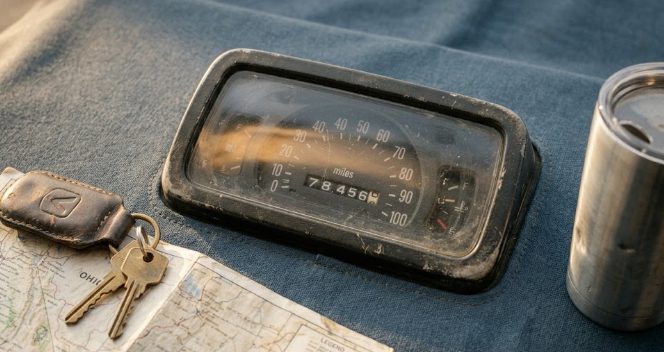
There’s a peculiar stage in a car’s life that rarely gets discussed. It’s not the shiny beginning or the weary high-mileage chapter. It’s that in-between stretch — roughly 60,000 to 90,000 miles — where the vehicle enters its strange middle age. The honeymoon is long gone, major failures haven’t usually started yet, and the car simply exists as a well-used daily companion with all its accumulating quirks and comforts on full display.
A car tells the truth in miles, not marketing. And during this middle phase, the truth comes out in subtle, sometimes funny, sometimes frustrating ways that no new-car review could ever capture.
I’m Daniel Reeves, 44, still covering the roads of Ohio, Indiana, and Kentucky for work. I’ve watched multiple cars pass through this exact mileage bracket, and each time it felt like entering a new, more honest chapter of our relationship. This is when the car stops trying to impress you and starts showing you who it really is.
Leaving the New-Car Glow Behind
By 60,000 miles, the last traces of that fresh-out-of-the-dealer magic have faded. The new-car smell is ancient history. The paint has a few battle scars from highway chips. The interior has developed its own personality shaped by your life — coffee stains that won’t fully come out, seat foam that’s starting to remember your exact shape, and controls that have developed slight resistance from thousands of touches.
I remember hitting 62,000 miles on one sedan and suddenly noticing how the driver’s seat had a distinct “sweet spot” where it felt most comfortable. Everywhere else felt slightly off. That’s middle age — the car has molded itself to you, for better or worse.
The Quirks That Define This Phase

This is the mileage range where small issues become part of your daily vocabulary:
That faint vibration in the steering wheel that starts at exactly 68 mph and disappears at 74.
The passenger-side visor that now needs an extra push to stay up.
The radio preset buttons that sometimes require two presses instead of one.
The way the trunk lid sounds a little heavier when you close it.
None of these are worth taking to the shop. They’re just the car clearing its throat and settling into its personality. One of my cars developed a charming (to me) little squeak from the rear parcel shelf every time I went over a certain expansion joint on I-71. After a while, I almost looked forward to hearing it — like a familiar greeting on my route.
You learn a vehicle one ordinary day at a time. In the 60-90k window, those lessons arrive steadily, without the drama of major repairs.
Performance Shifts You Notice
The car often feels a little less eager than it did at 30k. Acceleration is still perfectly adequate, but the sharpness has softened. Brakes still work well but might pulse faintly if the rotors have developed minor warping. The suspension has lost some of its initial tightness — it absorbs big bumps nicely but feels a bit floaty in corners compared to its younger self.
Fuel economy usually stabilizes here. It might be slightly worse than the EPA numbers promised, but it’s consistent. You’ve learned exactly how the car behaves in city versus highway driving, and you’ve adjusted your expectations accordingly.
I’ve found that many cars hit a sweet spot mechanically in this range. They’ve been broken in properly. Fluids have been changed multiple times. The engine has found its rhythm. If maintenance has been decent, these miles can actually feel quite reliable — just with more character than before.
The Interior’s Midlife Story
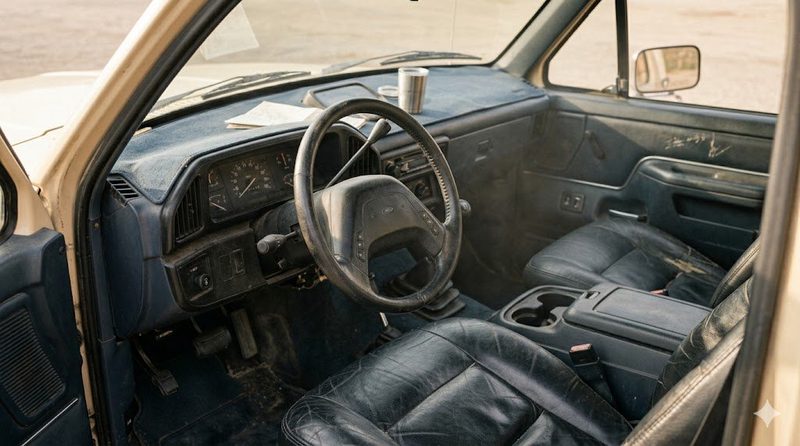
This is when the cabin really starts telling its story. Sun fading on the dashboard top. Wear patterns on the door cards where your arm rests. Floor mats permanently shaped to your shoes. The center console lid that no longer closes with that satisfying new-car thunk.
But there’s comfort in it too. The car feels broken in, like a good pair of jeans. The driver’s seat has given up pretending to be firm and now cradles you exactly right after a long day. The steering wheel leather has softened perfectly in the places your hands naturally sit.
One afternoon I caught myself absentmindedly rubbing the worn spot on the steering wheel while waiting at a light. It felt familiar. Comfortable. Almost affectionate. That’s the strange beauty of this phase — the car is becoming an extension of your daily habits rather than a separate machine.
Emotional Middle Age
Just like people, cars in this mileage range can make you reflect. You start thinking about how long you’ll keep it. You weigh the growing list of small fixes against the remaining reliable miles. You develop a protective feeling toward it — not quite love, but a solid appreciation mixed with mild annoyance at its quirks.
I’ve had moments in this phase where I felt genuinely content with the car despite its imperfections. Other times I’d see a newer model on the road and feel a brief pang of envy, only to remember that my current car knew my routes, my music preferences, and exactly how I liked the temperature set.
This middle period is often when attachment starts to quietly build. The car has been through seasons with you. It’s carried groceries, kids, work stress, and weekend escapes. It’s no longer just transportation — it’s part of your story.
Maintenance in the Middle Years
60k to 90k is usually when scheduled maintenance gets more serious. Timing belts or chains, transmission service, spark plugs, suspension components. These aren’t emergencies, but they require attention and budget.
The smart owners treat this phase as an investment period. Fix the small things now to avoid bigger problems later. The car usually rewards this care with continued faithful service. Ignore it, and the middle age can turn grumpy faster than expected.
I’ve learned to keep a running list of “middle-age to-dos” — nothing urgent, but items that improve daily life: quieter tires, a new cabin filter, touch-up paint on rock chips, a thorough interior detail.
The View From 75,000 Miles
Sitting at around 75k feels like the heart of this phase. The car is experienced but not tired. It has stories but still plenty of miles left. You know its strengths and weaknesses intimately. You’ve accepted what it will never be, and you’ve grown to value what it is.
There’s a quiet confidence that comes with this knowledge. You don’t baby the car anymore, but you also don’t take it for granted. You drive with the comfortable awareness of a long-term partnership.
Some of my best memories with cars happened in this mileage window — ordinary drives where everything just worked well enough. The radio playing a song I liked, the temperature just right, the road humming beneath us in a familiar rhythm. Nothing special, but somehow perfect in its ordinariness.
Why This Phase Matters Most
The 60-90k period strips away illusions. The car can no longer rely on newness to win your favor. You can no longer rely on initial excitement to overlook its flaws. What remains is the real relationship — one built on actual miles, actual days, and actual life.
Many people trade cars right before or during this phase, chasing that new-car feeling again. Others stay and discover something deeper: the satisfaction of a machine that has proven itself through real life, even if it’s no longer flashy.
I’ve come to respect cars most during their middle age. They’re like old friends — a little worn around the edges, full of character, and honest about what they can and cannot do.
If your car is approaching or living in this range, pay attention. These miles are telling you important things about the vehicle and about your own patience, values, and relationship with everyday objects. The truths you learn here will shape whether you keep it for the high-mileage years ahead or decide it’s time to part ways.
Because in the end, the middle age of a car isn’t about decline. It’s about revelation — the slow, steady unveiling of what this machine is really made of, and whether it belongs in the next chapter of your life.
No comments yet — be the first to share a thought.