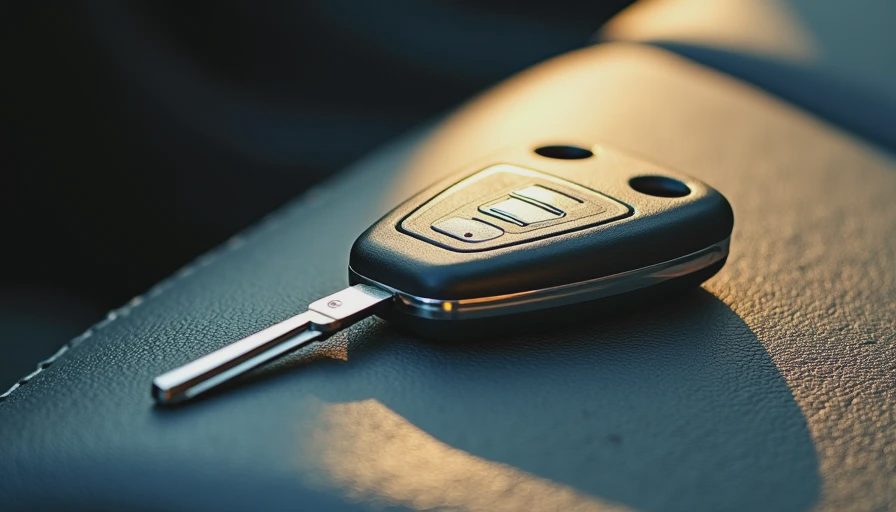
There comes a point in every long-term ownership story where the initial excitement has completely worn off. The new-car smell is gone. The novelty of the tech has settled into routine. You no longer get a little rush when you walk up to it in the parking lot. Instead, you just get in, adjust the mirror exactly one click, and drive.
And somehow, that ordinary moment feels better than the excitement ever did.
A car tells the truth in miles, not marketing. The truth that arrives after a few years is this: familiarity often beats excitement in the long run. Not because excitement is bad, but because it’s temporary. Familiarity is what remains when life gets real.
I’m Daniel Reeves, 44, still driving the same stretches of Ohio, Indiana, and Kentucky for work and family. I’ve owned enough cars long enough to see the pattern repeat. The ones that lasted in my heart weren’t always the most thrilling at the beginning. They were the ones that became quietly, deeply known.
The Excitement Trap
New cars are designed to dazzle. The sleek lines, the perfect paint, the way everything smells and feels fresh — it’s intoxicating. You imagine all the great drives ahead. You overlook the small ergonomic issues because everything is so shiny. For the first few months, even a traffic jam feels like an adventure.
But excitement is exhausting to maintain. It demands constant stimulation. After the sixth or seventh identical commute, the newness has evaporated. What’s left is the actual relationship.
I remember trading in a car I was genuinely excited about after only three years. On paper it was better than my previous one — more power, newer tech, sharper looks. Yet within months I found myself missing the old car’s way of doing things. The way the seat felt after 40,000 miles together. The exact position of the cupholder that never interfered with my elbow. The way the steering wheel had worn exactly where my hands lived.
When Familiarity Sneaks In
Familiarity doesn’t announce itself dramatically. It builds through repetition.
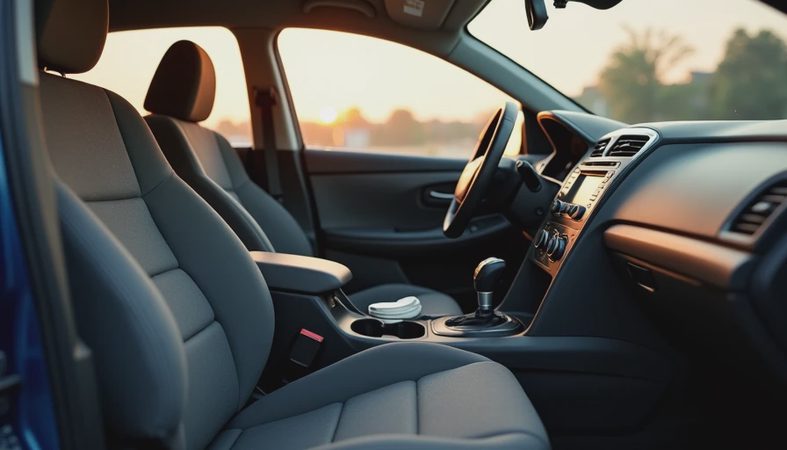
You learn exactly how far to turn the key (or how long to hold the start button) on cold mornings. You know the precise speed where the car’s road noise drops into its most pleasant tone. You instinctively reach for the temperature knob and land on the right setting without looking. The car stops being a tool and becomes part of your muscle memory.
One rainy evening last year, I was driving home exhausted. Without thinking, I reached down, adjusted the lumbar support exactly the way I like it, tilted the steering wheel a fraction, and settled in. The car felt like it was adjusting to me at the same time. That moment hit me — this wasn’t just transportation anymore. It was a space I knew better than some rooms in my own house.
You learn a vehicle one ordinary day at a time. And after enough ordinary days, that learning turns into something that feels a lot like comfort.
The Comfort of Predictability

There’s real peace in knowing what your car will do in every situation. I know exactly how it handles that tricky left merge onto I-75 when it’s raining. I know which pothole on my route will make the trunk rattle if I don’t slow down. I know the car will start reliably even after sitting in the airport parking lot for four days.
This predictability reduces mental load. Instead of constantly evaluating the machine, you can use the drive for thinking, decompressing, or simply zoning out safely. In a world that demands endless adaptation, having one thing that behaves exactly as expected becomes surprisingly valuable.
My wife once commented that riding in my car felt like putting on her favorite old sweater. Not fashionable, but instantly comforting. That’s the power of familiarity — it creates a mobile sanctuary tailored perfectly to your life.
What Excitement Can’t Provide
New cars bring dopamine hits. Familiar cars bring something steadier: trust.
Trust that it won’t leave you stranded on a Tuesday morning. Trust that the brakes will feel exactly the same as yesterday. Trust that the heater will warm your feet before you reach the highway. Trust that the weird little rattle at 58 mph is harmless and has been there for 18 months.
I’ve driven plenty of impressive vehicles that felt foreign even after weeks. Everything worked, but nothing felt intuitive. With a familiar car, the controls disappear because you don’t have to think about them. The car fades into the background so you can focus on the drive, the music, or your thoughts.
The Emotional Layer
There’s also an emotional safety that comes with familiarity. Your car has been with you through real life — tough work weeks, family arguments, good news phone calls, quiet drives where you just needed silence. It carries invisible memories in its worn spots and faint stains.
When I sit in my current car, I don’t see imperfections. I see evidence of thousands of miles shared. The faded spot on the passenger seat where my daughter used to toss her backpack. The steering wheel wear from gripping it tightly during that ice storm two winters ago. These marks tell our story.
Selling a car you’ve become truly familiar with feels heavier than selling a new one. You’re not just selling metal and plastic. You’re selling a piece of your daily rhythm.
Practical Side of Familiarity
On the practical level, familiarity makes you a better owner. You notice small changes quickly — a new vibration, a slightly different engine note, an extra second for the heater to warm up. Because you know the car so well, you catch issues early.
You also become efficient. No more fumbling with unfamiliar controls while driving. No more guessing the best way to load the trunk. Everything has its place and its rhythm.
I’ve learned to appreciate cars that reward long-term ownership. The ones with intuitive layouts, durable materials that age gracefully, and mechanical personalities that reveal themselves slowly rather than all at once.
When to Choose Familiarity Over Excitement
Not every car deserves long-term loyalty. Some relationships sour no matter how many miles you put in. But when you find one that grows better with familiarity, there’s wisdom in staying.
The best long-term cars aren’t always the ones that excited you most on day one. They’re the ones that quietly earned your trust over hundreds of ordinary Tuesdays. The ones that became better at being your car than at being impressive.
In a culture obsessed with the new and novel, sticking with a familiar car feels almost rebellious. It says you value depth over novelty. Reliability over flash. Comfort over constant stimulation.
The Quiet Reward
These days, when I see someone excitedly driving home a brand-new car, I smile with genuine happiness for them. But I also know what’s coming — the slow transition from excitement to familiarity. And if they’re lucky, they’ll discover what I have: the second phase is richer.
The car you know by heart doesn’t need to impress you anymore. It just needs to be there, day after day, in all kinds of weather and moods. And when it does that well, something special happens. The relationship deepens. The miles feel less like transportation and more like companionship.
Familiarity doesn’t shout. It doesn’t need to. It simply wraps around your daily life like a well-worn jacket — not the most exciting thing you own, but the one you reach for most often.
And in the end, that might be the highest compliment you can give a car.

No comments yet — be the first to share a thought.